按下面六点打托,货稳、量方准、少扯皮。打托不合格需要重新整理的,翻托整理费按实际发生收取(见《服务条款与免责》)。复杂的细节在下面「详细说明」里,第一次发货建议看一遍。
Follow these six points for stable freight and accurate measurement. Freight that has to be reworked is charged a repalletizing fee at actual cost (see Terms & Disclaimer). The finer details are in the notes below — worth a read before your first shipment.
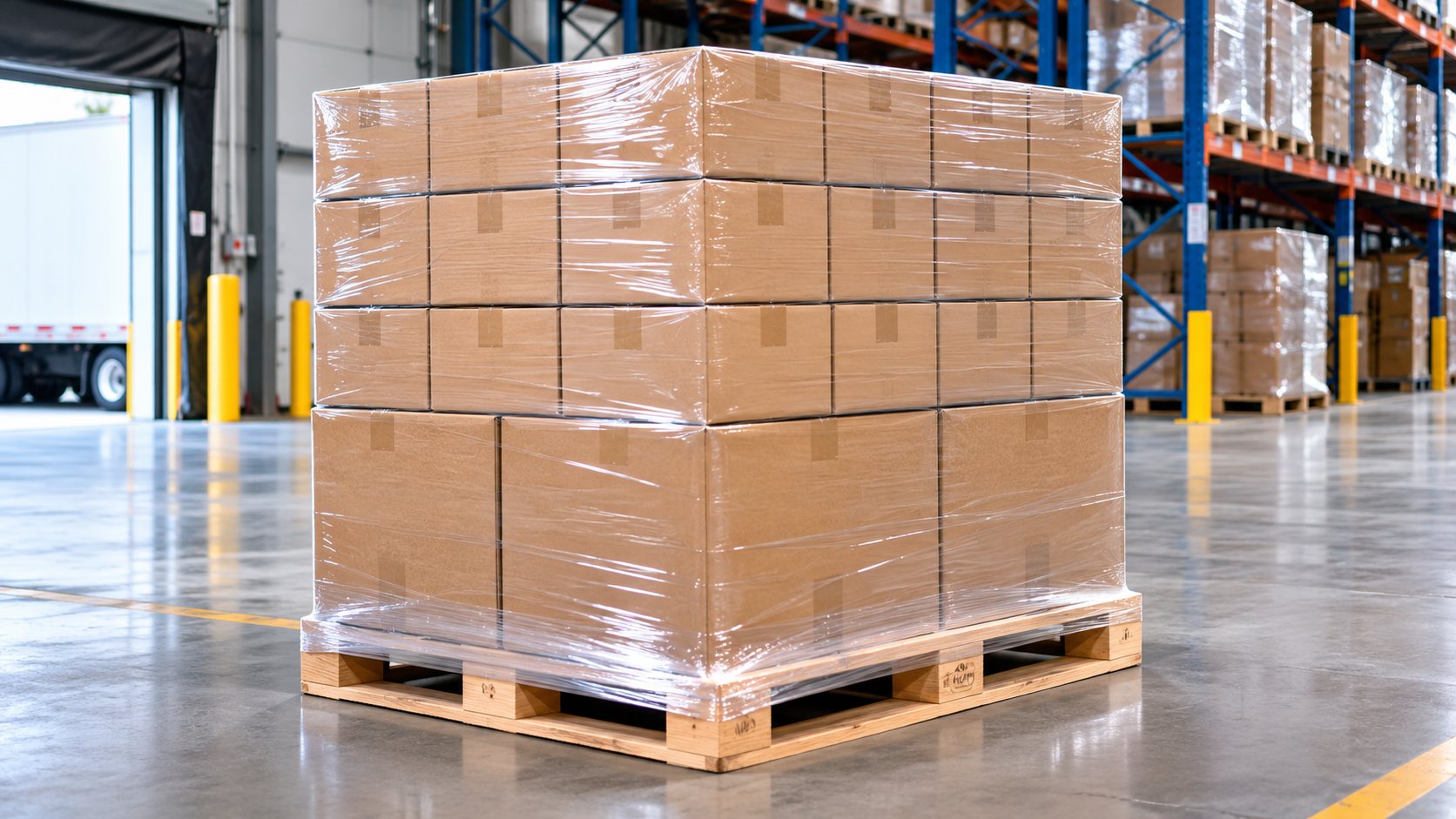
示意:托盘 48(长)× 40(宽)英寸,货物码放齐整、四边不外探,缠膜紧实。
A square, flush stack on a 48 × 40 in pallet, tightly wrapped, measures and travels best.
货物可以比托盘略宽一点:40 英寸那一边,单边超出 1 英寸以内(两边合计 2 英寸)不加费;48 英寸长边不许超出。超过这个范围的,按货物最外沿重新量方计价。先提醒一句:承运商都不建议货物超出托盘,最好全都码在托盘范围以内;上面的免费范围只是少量容差,不是让您故意往外超。不懂怎么算的,先问客服再发货。
Slight overhang is accepted on the 40-in side only — up to 1 in per side (2 in total) at no charge; no overhang is allowed beyond the 48-in long edge. Beyond these limits, freight is measured and priced at its outermost points. One caution: carriers do not recommend overhang on any side — the best practice is to keep all freight within the pallet footprint; the allowance above is a small tolerance, not an invitation to overhang on purpose. If you are not sure how your freight measures up, ask customer service before shipping.
Se acepta que la carga sobresalga un poco solo por el lado de 40 pulgadas: hasta 1 pulgada por lado (2 en total), sin recargo; no se permite sobresalir del borde largo de 48 pulgadas. Fuera de estos límites, la carga se mide y se cobra por su contorno exterior. Una advertencia: los transportistas no recomiendan que la carga sobresalga por ningún lado; la mejor práctica es mantener todo dentro del contorno del palet, y el margen anterior es solo una pequeña tolerancia, no una invitación a sobresalir a propósito. Si no está seguro de cómo queda su carga, pregunte a atención al cliente antes de enviar.
53 尺干货车厢高 94 英寸,货物进出要留空隙,一托总高(含托盘)90 英寸是上限,超过就可能进不了车厢。叉车进出车厢还要留操作空间和坡度,日常码货建议 80 英寸以下、最多不要超过 85 英寸,装卸顺畅、也不容易倒。
A 53-ft dry van's cargo box is 94 in high, and clearance is needed to load and unload, so the total height of one pallet, pallet included, is capped at 90 in — over that, freight may not fit through the door. A forklift also needs working room and ramp angle going in and out: keep everyday stacks at 80 in or below, and never above 85 in, so loading stays smooth and stacks stay stable.
La caja de un camión de caja seca de 53 pies mide 94 pulgadas de alto y se necesita espacio libre para cargar y descargar, así que la altura total de un palet, palet incluido, tiene un tope de 90 pulgadas: por encima, la carga puede no caber por la puerta. La carretilla también necesita espacio de maniobra y ángulo de rampa al entrar y salir: mantenga las pilas diarias en 80 pulgadas o menos, y nunca por encima de 85 pulgadas, para cargar sin problemas y con pilas estables.
车厢里面宽约 98 英寸,车厢门口只有 94 英寸,单件货物要过门、还要留进出的缝隙,最宽不能超过 93 英寸,日常建议 90 英寸以内。托盘并排码放的,整排总宽不要超过 96 英寸(两个 48 英寸并排正好是 96 英寸)。
The cargo box is about 98 in wide inside, but the doorway is only 94 in. A single piece has to pass the door with a gap to spare, so 93 in is the hard limit and 90 in or less is the everyday recommendation. Pallets loaded side by side: the whole row must not exceed 96 in (two 48-in pallets side by side are exactly 96 in).
La caja mide unas 98 pulgadas de ancho por dentro, pero la puerta solo 94. Una pieza individual debe pasar por la puerta con holgura, así que 93 pulgadas es el límite máximo y 90 o menos es lo recomendable a diario. Palets cargados lado a lado: toda la fila no debe superar las 96 pulgadas (dos palets de 48 pulgadas lado a lado suman exactamente 96).
超出的部分最容易被挤压、破损。装车前先加固:缠膜缠紧,重货、易散的货再加打包带固定,让货在托盘上不晃动、不移位,路上才不散托。
货要是散了、倒了,重新打托是要收费的:重新码托、换托、补缠膜的人工和材料,按实际发生向发货方收取(见服务条款里的「翻托整理费」)。多缠两圈膜、多打两条带,就是省这笔钱。
Whatever sticks out is what gets crushed or damaged first. Secure the load before pickup: wrap it tight, and add strapping for heavy or loose freight, so the load does not shift or wobble on the pallet and will not come apart in transit.
If a pallet does come apart or topple, re-palletizing is charged: the labor and materials to restack, swap the pallet or re-wrap are billed at actual cost to the shipper (see the re-palletizing fee in the Terms). An extra layer of wrap and a couple of straps are cheaper than that bill.
Lo que sobresale es lo primero que se aplasta o se daña. Refuerce la carga antes de la recogida: film bien tenso y, para carga pesada o suelta, flejes adicionales, para que la carga no se mueva ni se balancee sobre el palet y no se desarme en el camino.
Si un palet se desarma o se cae, volver a paletizar tiene costo: la mano de obra y los materiales para rearmar, cambiar el palet o volver a envolver se cobran al remitente según el costo real (consulte el cargo por re-paletizado en los Términos). Dar dos vueltas más de film y poner dos flejes más sale más barato que esa factura.